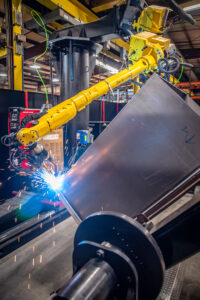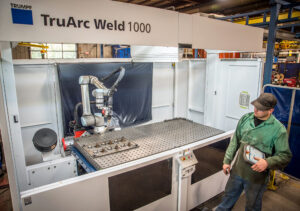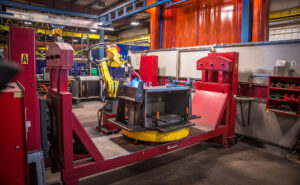
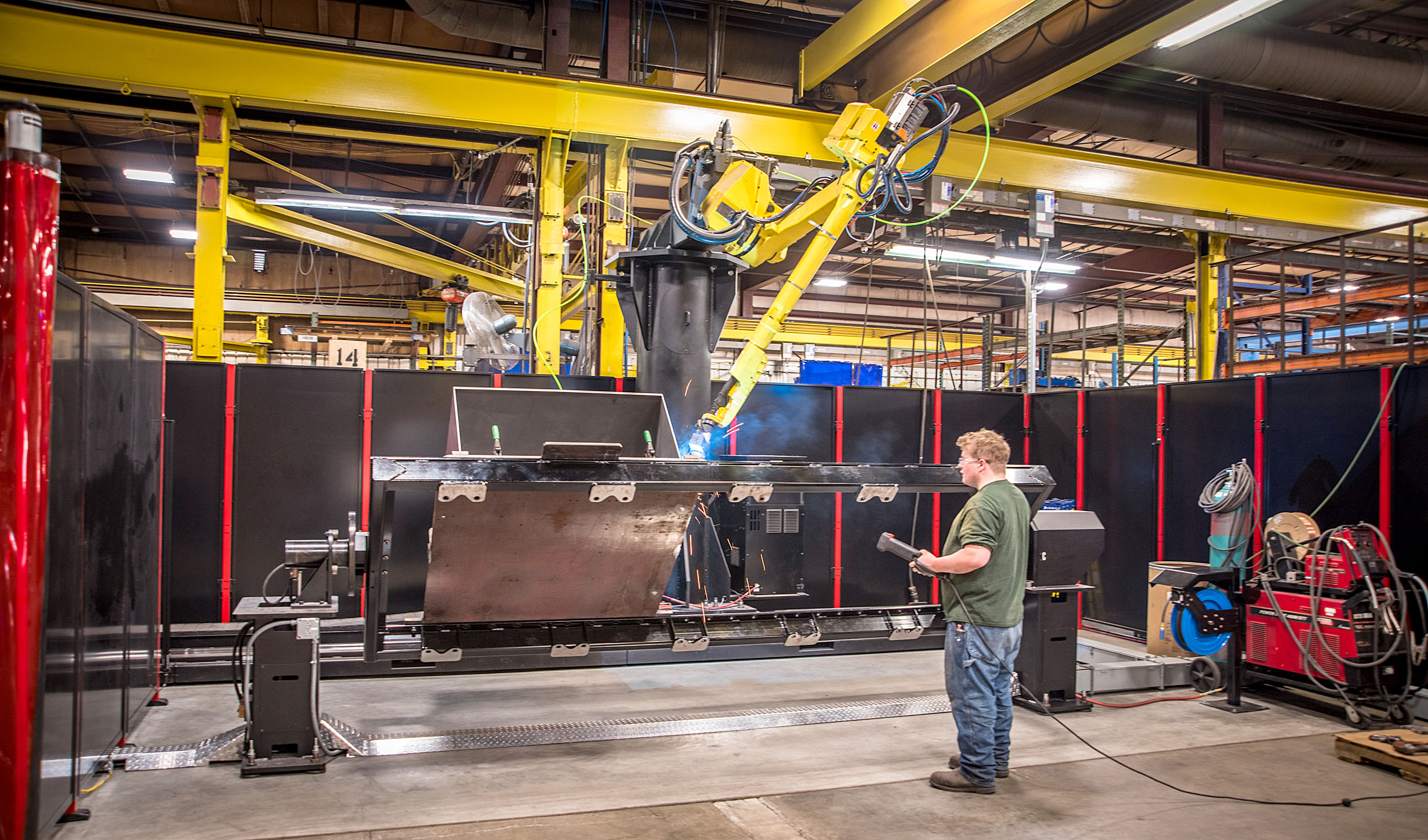
Manufacturing has entered a new era of automation. Robotic welding is no longer limited to repetitive, high-volume production environments where identical parts move through the same process day after day. Today, a new generation of collaborative automation is transforming fabrication by combining the consistency of robotics with the adaptability and expertise of skilled welders.
Known as Robotic Welding 2.0, this evolution is changing how fabrication shops improve quality, increase throughput, and remain competitive in a market that demands greater flexibility than ever before.
Why Robotic Welding Is Evolving
Traditional robotic welding systems were designed for predictable production runs. While highly effective for large quantities of identical parts, they often struggled with changing production requirements, custom projects, and the variability that comes with modern manufacturing.
Today’s fabrication environment looks very different. Customers expect shorter lead times, more customization, and uncompromising quality. At the same time, manufacturers continue to face challenges finding and retaining skilled welders.
Collaborative robots, commonly called cobots, are helping bridge that gap.
Unlike traditional welding robots that operate behind safety barriers, cobots are designed to work alongside human operators. Equipped with advanced sensors, artificial intelligence, machine vision, and real-time monitoring capabilities, these systems can adapt to changing conditions while supporting welders throughout the production process.
For manufacturers like Jones Metals, which work with a wide variety of part sizes, assemblies, and certified welding requirements, collaborative automation creates new opportunities to apply robotic welding across a broader range of projects.
The Technology Behind Robotic Welding 2.0
The power of collaborative welding comes from the integration of several advanced technologies working together within a single workflow.
Sensor-Driven Feedback
Advanced sensors monitor welding conditions continuously, allowing robots to compensate for variations in material thickness, joint alignment, or fit-up conditions. This helps maintain consistent weld quality even when conditions are less than perfect.
Simplified Programming Interfaces
Programming robotic systems has become significantly more user-friendly. New interfaces allow operators to teach welding paths more quickly, reducing setup times and making robotic welding practical for shorter production runs.
Human-Guided Automation
One of the most important developments is the ability to integrate operator expertise into automated processes. Skilled welders can oversee production, make adjustments, and optimize workflows while allowing robotics to handle repetitive welding tasks.
The result is a system that is not just automated but adaptive, effectively blending craftsmanship with precision manufacturing.
How Collaborative Automation Is Impacting Fabrication
The rise of collaborative welding systems is delivering measurable benefits across the manufacturing industry.
Higher Throughput Without Sacrificing Flexibility
Traditional automation performed best when every part was identical. Today’s collaborative systems are capable of handling greater variation, allowing fabricators to run mixed production batches without losing efficiency.
This flexibility helps manufacturers respond faster to customer demands while maintaining the productivity advantages of automation.
Addressing Skilled Labor Shortages
Skilled welders remain one of manufacturing’s most valuable resources. Rather than replacing these professionals, cobots help maximize their impact.
By automating repetitive welds, experienced welders can focus on process optimization, quality control, troubleshooting, and complex fabrication tasks that require human judgment. This expands workforce capacity while maintaining high standards of workmanship.
Making Mass Customization Possible
Historically, custom projects often came with higher production costs and longer lead times. Collaborative robotic welding helps reduce those barriers by enabling efficient production even on lower-volume or specialized jobs.
Manufacturers can accept a broader range of projects while maintaining competitive pricing and delivery schedules.
Robotic Welding vs. Manual Welding: Why Both Matter
Despite significant advancements in automation, robotic welding is not a replacement for manual welding. The most successful fabrication operations understand that each approach serves a unique purpose.
Robotic Welding Is Ideal For:
- Repetitive welds requiring tight tolerances
- Medium- to high-volume production runs
- Large assemblies that demand consistency
- Projects where repeatability is critical
- Applications requiring increased throughput
Manual Welding Remains Essential For:
- Highly complex fabrications
- Custom or one-off projects
- Tight-access welding positions
- Repair and rework applications
- Situations requiring immediate on-the-spot adjustments
The greatest value often comes from a hybrid approach that combines robotic efficiency with the flexibility and problem-solving ability of experienced welders.
Improving Consistency Through Collaborative Robotics
Consistency remains one of the strongest advantages of robotic welding.
Once programmed, a robotic system performs the same weld repeatedly with exceptional accuracy. When advanced vision systems and sensors are added to the process, cobots can also recognize and compensate for minor variations that would otherwise impact quality.
The benefits include:
- Reduced scrap rates
- Fewer production errors
- Less rework
- Improved inspection pass rates
- Greater confidence in final product quality
For industries with strict welding standards and certification requirements, this level of consistency can provide a significant competitive advantage.
Understanding the ROI of Robotic Welding
While adopting robotic welding technology requires an upfront investment, the long-term return can be substantial. Key areas that contribute to ROI include:
Reduced Labor Costs Per Part – Automation helps lower the labor hours required for repetitive welding operations, improving overall production efficiency.
Lower Scrap and Rework Rates – Consistent weld quality reduces defects and minimizes costly corrective work.
Increased Production Capacity – Robotic systems can operate continuously and maintain high output levels, allowing manufacturers to take on more work without proportionally increasing labor costs.
Faster Customer Turnaround Times – Improved efficiency and predictability help manufacturers shorten lead times and better meet customer expectations.
Over time, these operational gains can create substantial cost savings while increasing profitability across diverse product lines.
Emerging Trends Shaping the Future of Welding Automation
As Robotic Welding 2.0 continues to evolve, several other innovations are pushing the industry forward. The future of fabrication will increasingly involve seamless collaboration between robotic systems and human welders, allowing each to contribute where they perform best. Tomorrow’s welding professionals will not only weld but also operate, program, and optimize robotic systems. Manufacturers investing in workforce training today are positioning themselves for long-term success.
The Bottom Line
Robotic Welding 2.0 is not about replacing skilled welders. It is about enhancing their capabilities through intelligent, collaborative automation.
By combining human expertise with advanced robotics, manufacturers can achieve greater precision, higher throughput, improved consistency, and the flexibility needed to meet today’s demanding production requirements.
As fabrication continues to evolve, companies that embrace this collaborative approach will be better equipped to improve efficiency, expand capabilities, and deliver the quality their customers expect. For forward-thinking manufacturers, Robotic Welding 2.0 is not simply the future of welding. It is the future of competitive fabrication.