
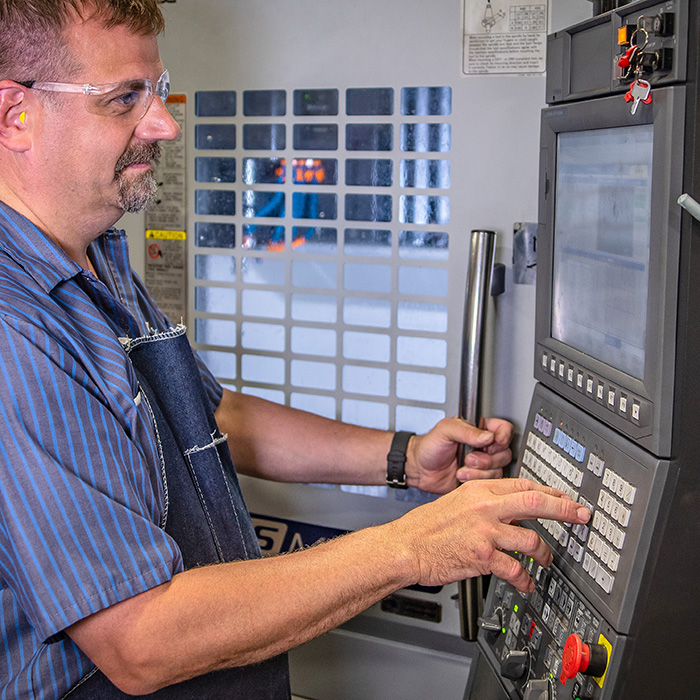
Power plants depend on precision. From rotating equipment and piping systems to structural supports and pressure-retaining components, every fabricated part plays a role in maintaining safe and reliable operations. While fabrication tolerances are often viewed as a manufacturing detail, their impact extends far beyond the shop floor.
The reality is simple: poor tolerance control can create installation challenges, equipment reliability issues, and costly downtime. Understanding how tolerances affect assembly and plant performance can help facility managers make better decisions that improve uptime and reduce maintenance costs.
Quick Takeaways
- Poor tolerance control leads to fit-up issues during installation.
- Misalignment can cause vibration, wear, and equipment failure.
- Assembly delays directly impact plant availability and maintenance schedules.
- Right-sized tolerances improve both fabrication costs and long-term uptime.
Why Tolerances Matter Beyond the Shop Floor
Fabrication tolerances define the allowable variation in a component’s dimensions, geometry, or alignment. While these limits may seem minor on a drawing, even small deviations can create significant challenges once parts arrive at a power plant.
In critical applications, tolerance issues can affect:
- Alignment of rotating equipment
- Seal performance
- Structural integrity
- Equipment reliability
- Maintenance requirements
What begins as a dimensional variation during fabrication can quickly become an operational problem during installation and throughout the life of the equipment.
The Link Between Tolerances and Assembly
-
Fit-Up Challenges
One of the most immediate consequences of poor tolerance control is difficulty during installation.
When fabricated components do not align properly with mating parts, crews are often forced to make adjustments in the field. Common corrective actions include:
- Grinding
- Shimming
- Reworking welds
- Redrilling holes
- Rewelding components
While these fixes can solve the immediate problem, they add labor costs, extend installation schedules, and increase the risk of introducing additional quality issues.
For power plants operating on tight outage schedules, these delays can have serious consequences.
-
Misalignment Risks
Tolerance-related fit-up problems do not end once installation is complete.
Improperly manufactured components can force assemblies into positions that create misalignment throughout the system. This is particularly problematic in rotating equipment and mechanical systems where precision is essential.
Misalignment can lead to:
- Increased vibration
- Excessive bearing loads
- Premature component wear
- Reduced equipment efficiency
- Shortened equipment lifespan
Over time, these issues may contribute to unexpected maintenance events and equipment failures that impact plant operations.
-
Delays During Shutdown Windows
Power generation facilities rely on carefully planned maintenance outages. Every task is scheduled to maximize productivity and minimize lost generation time.
When fabricated parts arrive and fail to fit as expected:
- Installation crews spend valuable time troubleshooting.
- Additional rework becomes necessary.
- Equipment startup schedules are delayed.
- Outage windows may need to be extended.
Because maintenance shutdowns involve multiple trades and interconnected tasks, even a relatively minor fit-up issue can create a cascading effect across the entire project.
The result is higher labor costs, longer outages, and reduced plant availability.
How Tolerances Affect Downtime
Downtime remains one of the most expensive risks in power generation. Every hour that critical equipment is unavailable can translate into lost production and increased operating costs.
Tolerance issues contribute to downtime in several ways.
Extended Installation Time – When components require modification during installation, crews spend additional hours correcting problems rather than completing scheduled work.
Early Equipment Failures – Misalignment and improper fit can accelerate wear on bearings, seals, shafts, and other critical components. This often results in more frequent repairs and replacements.
Unplanned Maintenance – Fabrication-related issues that are not identified during installation can surface later during operation, leading to unexpected shutdowns and emergency repairs.
Even seemingly minor tolerance discrepancies can eventually develop into significant operational disruptions.
Finding the Right Balance
A common misconception is that tighter tolerances always lead to better outcomes. In reality, tighter tolerances often increase manufacturing costs and lead times without providing meaningful operational benefits.
The key is applying precision where it matters most.
Areas That Typically Require Tight Control
- Rotating equipment interfaces
- Sealing surfaces
- Bearing mounts
- Shaft connections
- Load-bearing mechanical assemblies
Areas That May Allow More Flexibility
- Large structural components
- Architectural features
- Non-contact surfaces
- Secondary support structures
By understanding the functional requirements of each component, manufacturers and plant operators can establish tolerances that balance performance, manufacturability, and cost.
Best Practices for Reducing Risk
Power plants can minimize installation and reliability issues by taking a strategic approach to tolerance management.
Coordinate Tolerances Across Mating Parts – Individual components may meet drawing specifications while still creating assembly issues if tolerances are not properly coordinated. Reviewing assemblies as a complete system helps prevent cumulative variation problems.
Work Closely with Fabrication Partners – Experienced fabrication partners understand how dimensional control affects field installation. Early collaboration can identify critical features and prevent costly issues before production begins.
Use Inspection and Quality Checks Strategically – Dimensional inspections should focus on characteristics that directly affect assembly and performance. Verifying critical dimensions before shipment helps reduce surprises during installation.
Plan for Real-World Conditions – Components rarely operate in ideal environments. Temperature changes, field conditions, and installation constraints should all be considered when establishing tolerance requirements.
What This Means for Plant Managers
For plant managers, maintenance leaders, and engineers, tolerances are much more than numbers specified on a drawing.
Smart tolerance decisions deliver measurable benefits, including:
- Faster installations
- Reduced outage durations
- Fewer field modifications
- Improved equipment reliability
- Lower maintenance costs
- Greater plant availability
Investing in proper fabrication quality upfront often prevents much larger expenses later in the asset lifecycle.
Final Thought
Fabrication tolerances are a direct link between manufacturing quality and power plant performance. When components are built to the appropriate specifications, installations proceed more smoothly, equipment operates more reliably, and maintenance teams face fewer unexpected challenges.
Getting tolerances right is not about pursuing perfection. It is about applying precision where it matters most.
For power plants focused on reliability, uptime, and cost control, that distinction can mean the difference between smooth operation and costly downtime.